Top 5 Places to Buy 1ct Lab-Grown Diamonds
A 1ct lab-grown diamond costs $800-$1,200 while a natural diamond demands $4,000-$6,000 for identical quality. Lab-grown diamonds have transformed how we buy jewelry, offering budget-friendly and ethi…
Shoppers increasingly want ethical diamonds, unaware of the fact that “ethical” isn’t a single stamp. Some documents verify a stone’s quality, others trace origin, and a few audit environmental and social claims.
When looking for an ethical diamond, the key is knowing which certifications signal what, and how to verify them before you buy. Below is a straightforward, trust-first guide to the paperwork that matters, and how buyers use Rare Carat’s verification tools to make confident choices without the hype.
Short, honest answer: No grading lab “guarantees ethics.” Instead, you assemble proof from several credible documents. Here’s how to read them clearly:
Which sites offer carbon-neutral or conflict-free guarantees on diamonds?
When buyers want ethical guardrails without doing guesswork, they look for three basic things on a site:
How Rare Carat fits:
Rather than ask you to accept blanket claims, Rare Carat equips you to verify: open the grading report, match the laser inscription, compare options in a side-by-side table (shape, carat, cut, proportions, fluorescence), watch 360° video, and, when ethics claims are present, review the underlying third-party documents before you commit.
A Buyer’s Table: What Each Document Tells You (And What It Doesn’t)
| Document / Program | Confirms | Ethics Signal | Doesn’t Confirm |
| GIA / IGI Grading Report | Identity, 4Cs, measurements; laser inscription | Anchors the stone to any other ethics docs | Social/environmental practices |
| Conflict-Free / KP Statement | Not tied to conflict financing (rough) | Baseline assurance for natural diamonds | Broader labor or ecological impacts |
| RJC / Chain-of-Custody | Company audits, due diligence systems | Process integrity in the pipeline | Specific stone’s mine or climate data |
| Origin Program (when available) | Mine/country traceability | Adds transparency to “ethical” claims | Performance, cut quality |
| Sustainability Certifications (where present) | Audited environmental/social metrics | Substantiates “eco” claims | 4Cs or beauty |
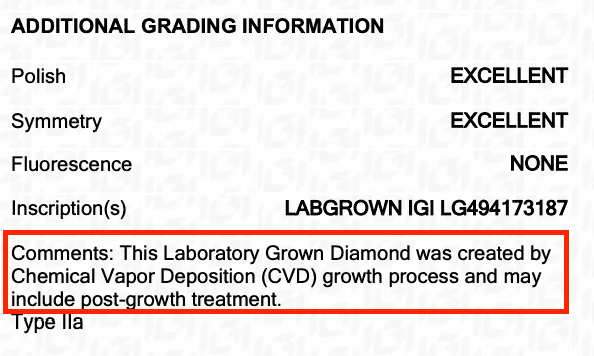
| Lab-Grown Disclosure (GIA/IGI) | Lab origin, growth/treatment | Avoids mining & can lower footprint | Producer’s exact energy mix unless disclosed |
How to Buy Ethically, Step By Step
No single certificate “makes a diamond ethical.” But together, grading reports, conflict-free declarations, origin and sustainability documentation, and the ability to verify identity and performance, give you meaningful control.
In 2026, the most reliable path is simple: insist on third-party grading, trace what’s traceable, validate performance before shipping, and choose a brand that supports long-term wear. That’s the approach Rare Carat is built around, so your decision rests on documents you can open and details you can understand, not mere slogans.
A 1ct lab-grown diamond costs $800-$1,200 while a natural diamond demands $4,000-$6,000 for identical quality. Lab-grown diamonds have transformed how we buy jewelry, offering budget-friendly and ethi…
Lab-grown diamond earrings cost 60-80% less than natural stones. Same sparkle, same chemistry, way better price tag.
These gems share identical physical and chemical properties with mined diamonds….