Best Diamond Shape for a 1-Carat Lab-Grown Diamond: Face-Up Size, Cut, and Certification
Compare the best shapes for a 1-carat lab-grown diamond, including face-up size, sparkle, proportions, certification, and buying checks.
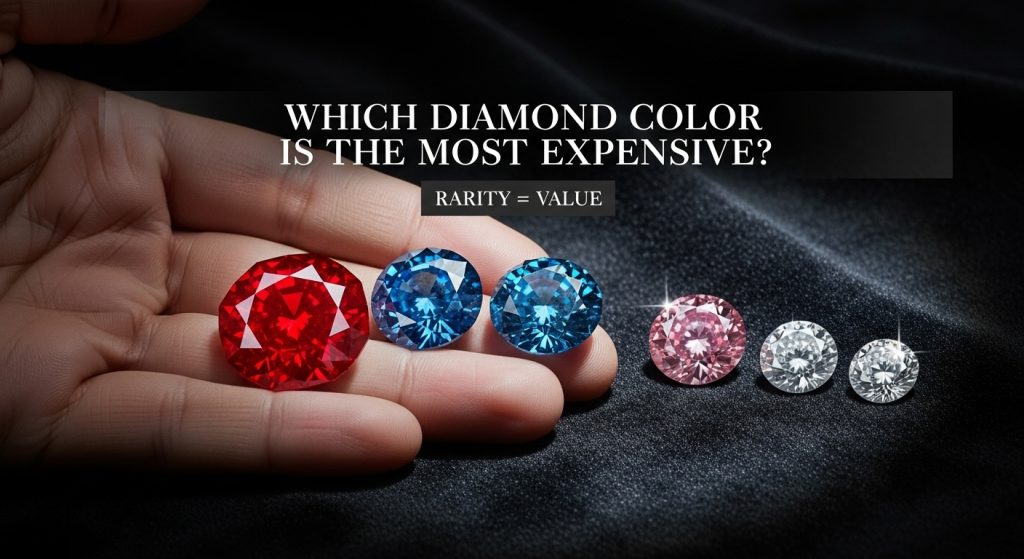
Diamonds come in a stunning array of colors, but not all are valued equally. If you’ve ever wondered which shade commands the highest price, you’re not alone. Let’s break it down in simple terms.
Diamonds are graded on a color scale, with the most expensive colors falling outside the traditional “colorless” range.
These are the highest-graded white diamonds, completely free of color.
Highly valuable, but not necessarily the most expensive.
Rare, naturally colored diamonds (pink, blue, red, green) often surpass colorless diamonds in price.
Their value depends on rarity, hue, and saturation.
Here’s the ranking of the rarest (and priciest) diamond colors:
Red Diamonds
Extremely rare—only a handful exist.
Example: The Moussaieff Red Diamond (5.11 carats) sold for millions per carat.
Blue & Pink Diamonds
Blue diamonds (like the Hope Diamond) and vivid pinks (e.g., Pink Star Diamond) fetch record prices at auctions.
Green & Violet Diamonds
Natural green diamonds (colored by radiation) and violet hues are exceptionally scarce.
Canary Yellow & Intense Orange
Bright, saturated yellows and oranges (like the Graff Vivid Yellow) are highly sought after.
Scarcity: Fewer naturally occurring colored diamonds exist.
Demand: Celebrities and collectors drive up prices (e.g., Jennifer Lopez’s pink diamond engagement ring).
Not at all! A flawless D-color diamond still costs a fortune—but fancy colors often break records due to their uniqueness.
If you’re buying for investment, rare colors like red or blue are top choices. For a classic look, a high-grade colorless diamond is timeless.
Compare the best shapes for a 1-carat lab-grown diamond, including face-up size, sparkle, proportions, certification, and buying checks.
SI2 Diamonds Editorial status: This verification-first guide explains SI2 clarity without treating the grade as a guarantee of appearance. It shows buyers how to assess an individual diamond’s inclusions, cut, shape, certification, durability, and inspection terms before purchasing. What are SI2 diamonds? SI2 diamonds are graded “Slightly Included 2” for clarity, meaning a professional grader can see noticeable inclusions under 10× magnification. The grade does not by itself say whether inclusions are visible without magnification. Eye appeal depends on an