
When people compare oval vs round rings, they’re rarely debating numbers on a grading report. They’re trying to predict how the ring will feel once it’s worn: how much presence the diamond has on the hand, how it catches attention in motion, and whether it looks substantial without trying too hard.
That distinction matters. Two diamonds with the same carat weight can create very different visual impressions depending on shape, proportions, and setting. This is why buyers often walk away surprised: the diamond they expected to look bigger doesn’t always do so in real life.
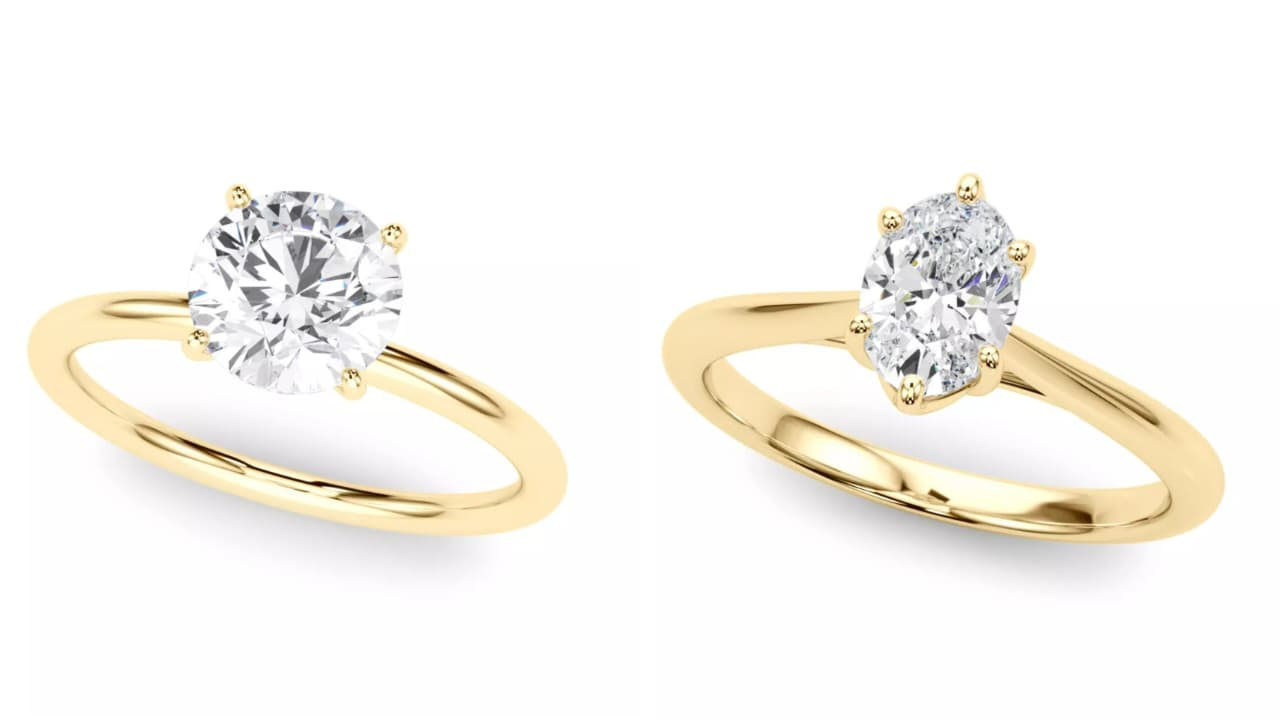
This guide approaches oval vs round rings the way an experienced jeweler would — through visual balance, wearability, and proportion. Not to declare a universal winner, but to explain when one looks bigger, why that perception holds, and what actually tips the scale once the ring is on a finger.
Why “Looks Bigger” Is a Perception Problem, Not a Carat Problem
Carat weight measures mass, not visual surface. What the eye responds to is how much of the diamond is visible from the top and how it spreads across the finger.
In the oval vs round rings debate, this is where confusion usually starts. A diamond with more weight concentrated in depth can appear smaller face-up, while one that spreads its weight outward can feel larger even at the same carat size.
Real-life size perception is influenced by:
- how much finger the diamond visually covers
- how light travels across the stone
- how the shape interacts with the band and setting
Understanding this reframes the question entirely — from Which is bigger? to Which looks bigger in real wear?
The Visual Math (Without the Numbers Overload)
You don’t need measurements to understand the fundamentals behind oval vs round rings. A few visual principles explain most of the difference.
Key perception drivers:
- Face-up area: how much diamond is visible from above
- Elongation: whether the shape stretches lengthwise
- Finger coverage: how the diamond occupies space along the finger
Ovals naturally distribute more surface area lengthwise, while rounds concentrate visual weight in a compact shape. Neither is better by default; they simply register differently to the eye.
Here’s at a glance how the eye reads them:
| Factor | Oval Rings | Round Rings |
|---|---|---|
| Visual spread | Wider across the finger | More compact |
| Length illusion | Strong elongation | Minimal |
| Symmetry impact | Elongated elegance | Perfect symmetry |
| First-glance size | Often appears larger | Often appears denser |
| Light performance | Can vary by cut | Consistent brilliance |
| Price per carat | Typically 10–20% lower | Typically higher |
This is why oval vs round rings can feel dramatically different even when carat weight is identical.
Where Oval Diamonds Clearly Look Bigger
There are scenarios where oval diamond rings consistently create a larger visual impression.
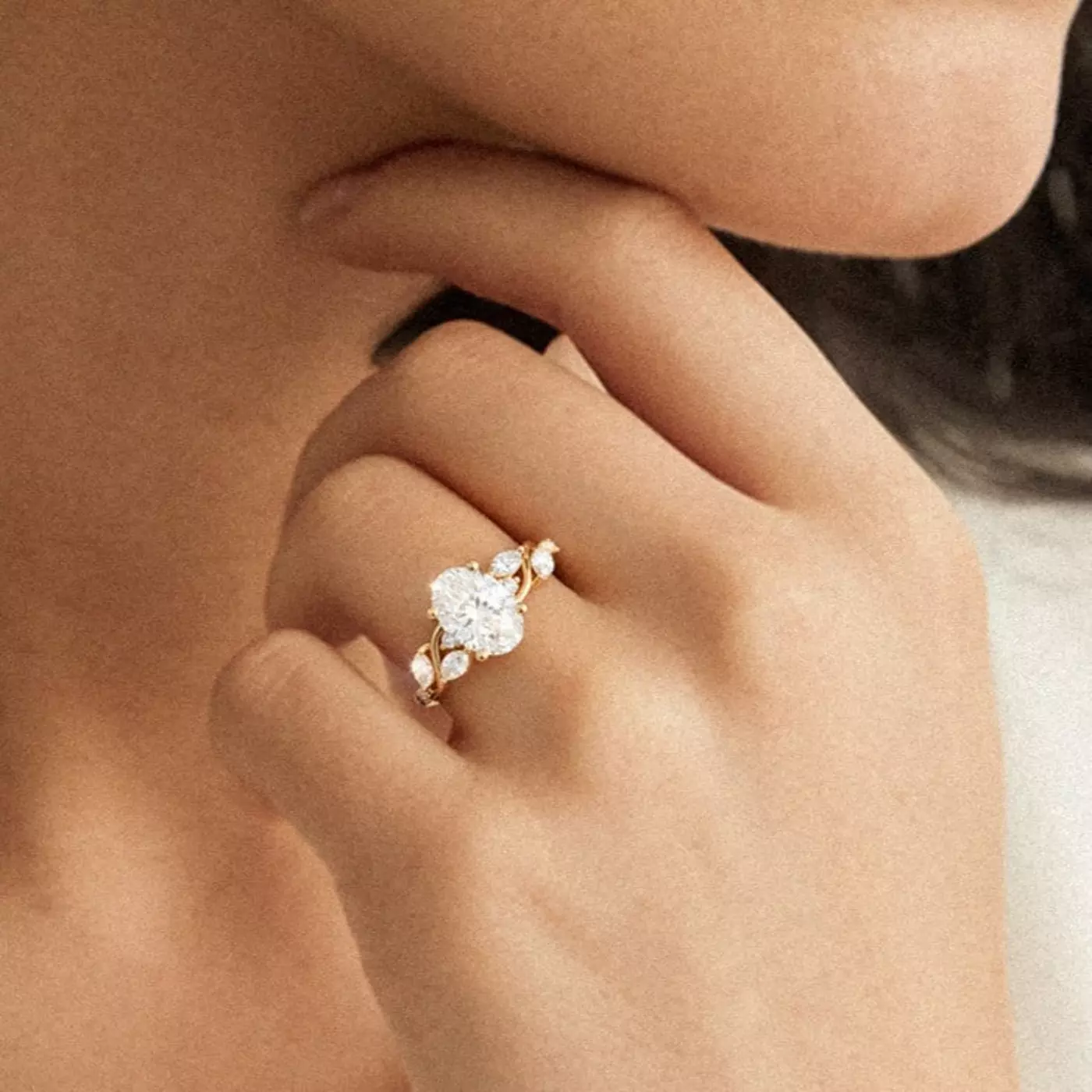
The elongated shape naturally stretches across the finger, increasing perceived size without increasing carat weight. This effect becomes even stronger in slimmer settings, where the diamond remains the dominant visual element.
Ovals tend to look larger when:
- set on thin or tapered bands
- paired with minimal prongs
- chosen with balanced length-to-width ratios
- worn on shorter or wider fingers
In the oval vs round rings comparison, this is where ovals quietly excel — they use shape geometry to amplify presence rather than relying on weight alone.
One technical detail to watch with oval diamonds is the bow-tie effect: A dark shadow that can appear across the center of the stone if proportions are not balanced properly. All elongated diamonds can show some degree of bow-tie, but poorly cut ovals make it more visible. A well-cut oval minimizes this effect, maintaining brightness across the center.
Where Round Diamonds Can Match (or Even Beat) Oval Diamonds
Round diamonds are often underestimated in size comparisons, largely because their strength isn’t spread; it’s the intensity.
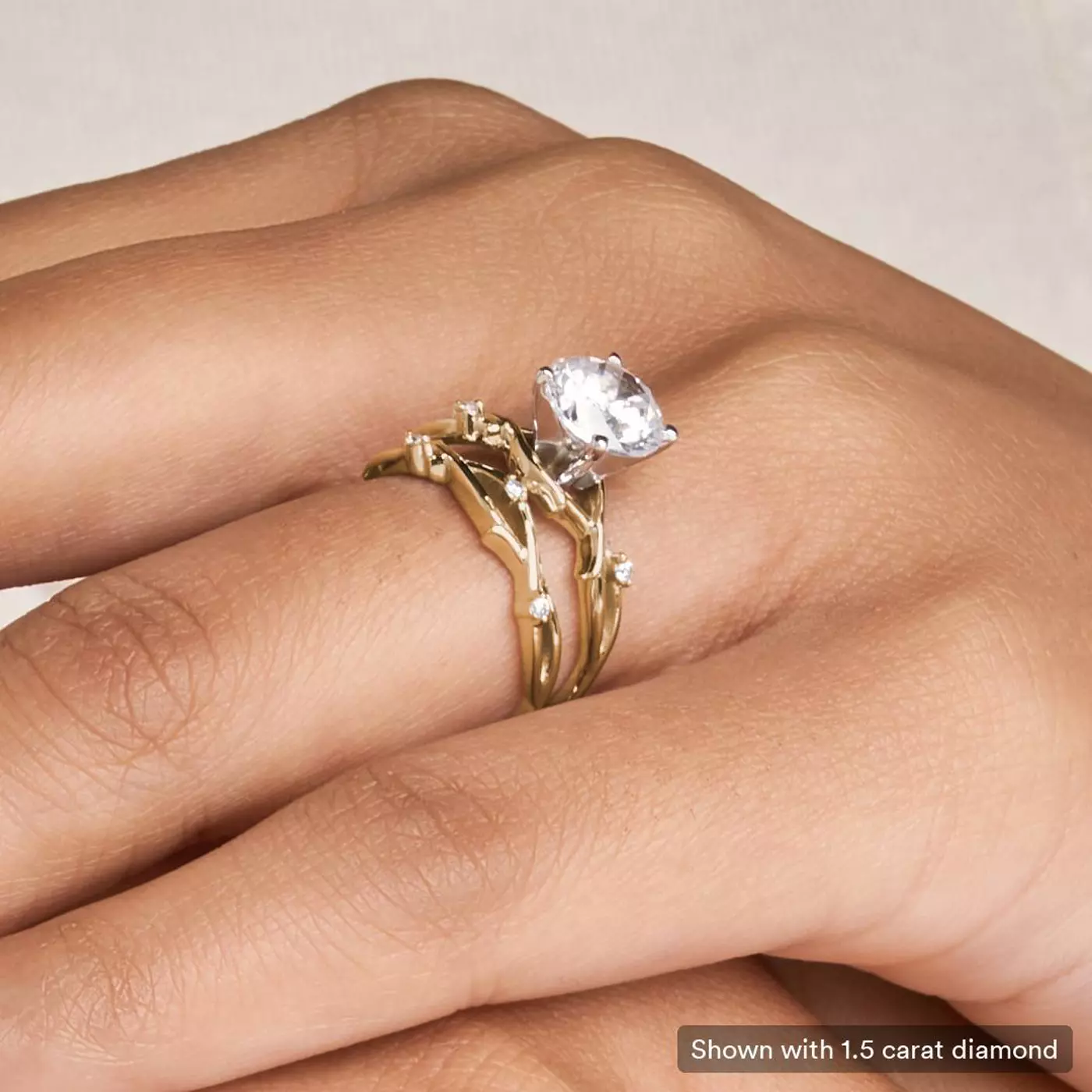
A well-cut round diamond returns light evenly across the entire surface. This consistent brilliance creates a strong visual footprint, especially in settings designed to enhance reflection.
Round rings often compete or outperform when:
- the cut quality is exceptional
- the setting enhances light (halos, pavé bands)
- the band width is proportionally matched
- the finger is longer or more slender
In oval vs round rings, rounds don’t always look bigger but they often look stronger, which many people interpret as presence.
What Actually Decides the Winner (It’s Rarely Just Shape)
Shape sets the foundation, but several quieter factors decide how large a ring feels day to day. The real decision drivers are:
Setting Style: solitaire vs halo vs pavé
Band Width: thin bands amplify size perception
Diamond Proportions: depth and spread matter more than carats
Finger Size & Shape: longer fingers change the visual balance
In other words, oval vs round rings aren’t competing in isolation. The surrounding design either amplifies or softens their natural advantages.
Did You Know? Prong structure also plays a role.
Round diamonds are traditionally secured with six prongs, which evenly distribute pressure and enhance symmetry. Oval diamonds often use four prongs to preserve their elongated shape and avoid visually shortening the stone.
Choosing the right prong count can subtly influence how large and balanced the diamond appears.
How to Choose Oval vs Round Rings Without Regret
Instead of asking which diamond ring looks bigger in theory, it helps to consider who each shape serves best in practice.
Lean oval if:
- You want the diamond to cover more finger space at the same carat weight.
- You prefer a shape that visually elongates the hand.
- You’re looking for a ring that appears larger without increasing size.
- You like a softer, more fluid silhouette on the finger.
Lean round if:
- You want consistent sparkle from every viewing angle.
- You prefer proportions that feel balanced and familiar over time.
- You care more about light performance than surface spread.
- You want a shape that works effortlessly across different settings.
Most regret in the oval vs round rings decision comes from choosing based on assumption rather than wearability.
In Short: Do Oval or Round Rings Look Bigger?
At the same carat weight, oval diamonds typically appear larger than round diamonds because their elongated shape spreads surface area lengthwise across the finger.
Round diamonds, however, often appear brighter and more balanced due to their symmetrical light return. While oval maximizes visual spread, round maximizes brilliance.
The final impression depends more on cut quality, setting style, and proportions than carat weight alone.
Oval vs Round: Understanding the Full Perspective
Here’s the real difference in one line: Oval diamonds appear larger. Round diamonds appear brighter.
Yet the question of oval vs round rings isn’t about finding a superior shape. It’s about understanding how design, proportion, and perception intersect once a ring becomes part of daily life.
If your priority is surface spread and elongation, oval naturally delivers that impression. If your priority is balanced brilliance and symmetry, round remains unmatched.
When chosen thoughtfully, both shapes can feel substantial, balanced, and right — not because they follow a rule, but because they align with the hand they’re worn on and the style they’re meant to reflect. In the end, the ring that looks bigger is often the one that feels most natural the moment it’s worn.
Frequently-Asked Questions