Free delivery in US · Free resizing · Lifetime warranty
How to Ensure the Quality of a Diamond: A Buyer’s Checklist
A proposal, an anniversary, or even a self-purchase deserves more than a diamond that simply looks good under jewelry lights. What truly matters is knowing that your stone is authentic, certified, and capable of holding value over time.
The good news? With a clear checklist, you don’t have to second-guess; you can buy with full confidence. Here’s a special guide fromRare Caraton how to make sure the diamond you choose (especially a lab-grown diamond) meets the highest standards of quality.
How can I ensure the quality of a lab-grown diamond?
Start by remembering: appearance alone isn’t enough. A diamond might sparkle beautifully in-store but still fall short on grading standards. To ensure quality:
Check the cut first. It determines brilliance more than any other factor.
Verify the laser inscription number, which ties directly to the grading report.
Trusted platforms like Rare Carat simplify this process by only listing GIA- and IGI-certified diamonds and offering free gemologist checks, so you never have to take a seller’s word for it.
Authentic diamonds display traits that simulants cannot replicate. For example:
Refractive brilliance: Real diamonds bend and reflect light in a way that creates unmatched sparkle.
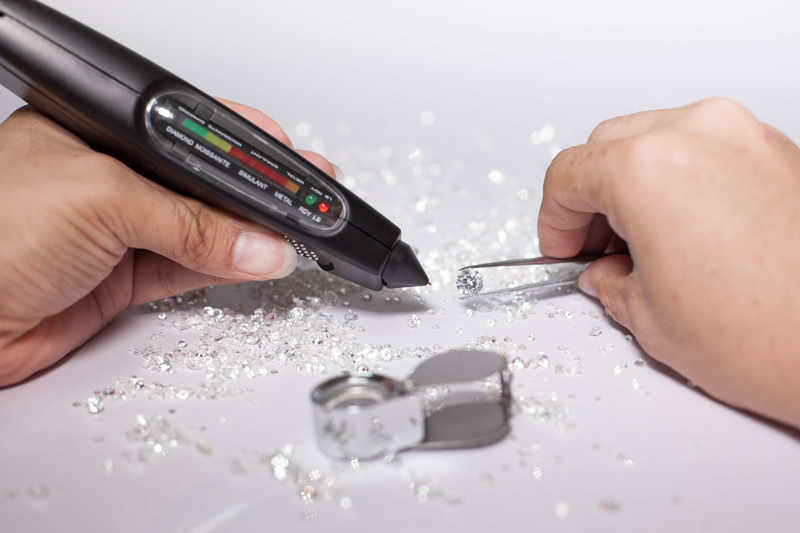
Thermal conductivity: Diamonds disperse heat quickly (a trait used in diamond testers).
Durability: At a hardness of 10 on the Mohs scale, diamonds resist scratching like no other gemstone.
While some traits can be tested at home, they’re no substitute for expert evaluation. For everyday buyers, relying on certified reports is the most foolproof way to distinguish the real deal.
What certifications should I look for in lab-grown diamonds?
Speaking of authenticity, certification is your ultimate guarantee of transparency. For both natural and lab-grown diamonds, the most reliable certifications come from:
GIA (Gemological Institute of America)
IGI (International Gemological Institute)
Both grade diamonds across the 4Cs (cut, clarity, color, carat) and confirm whether a stone is natural or lab-grown. Choosing a certified diamond ensures you’re not just dazzled by the shine, you’re backed by science.
Explore Rare Carat’s lab grown diamonds, all certified by GIA or IGI: Click Here
Which certifications are most trusted for diamonds?
In the diamond world, GIA remains the gold standard. Its grading is famously strict and globally respected. IGI is also highly regarded, especially for lab-grown diamonds, and provides consistent, thorough grading.
By contrast, reports from lesser-known labs can sometimes be inflated, making stones look better than they actually are. That’s why Rare Carat only deals with GIA- and IGI-certified diamonds and offers a Free Diamond Price & Quality Report — a tool for cross-verification in simpler terms & metrics, allowing buyers total peace of mind.
Why is certification important for confirming a diamond is real?
Without certification, you can’t be sure if your diamond is genuine or if it’s a simulant like moissanite or cubic zirconia. A proper grading report verifies authenticity and details its quality, protecting you from overpaying. Always remember, certification is the line between confidence and doubt.
What does a diamond’s laser inscription reveal about authenticity?
Every certified diamond has a unique laser inscription etched onto its girdle. This microscopic number matches its grading certificate and acts as a fingerprint, proving that the diamond you’re holding is the exact one that was graded.
Good brands like Rare Carat keep you covered when it comes to such small details.
✅ Compare multiple stones side by side to understand quality differences.
❌ Rely solely on visual appeal without reviewing the grading report.
✅ Use trusted platforms only that emphasize certification and transparency.
❌ Buy from sellers who refuse to provide certifications or disclose origin.
✅ Ask for expert help if you feel uncertain (Rare Carat offers free gemologist consultations to guide you.)
❌ Assume that higher price always equals higher quality (value comes from smart comparisons.)
Confidence Is the Real Sparkle
A diamond’s value lies not just in its shine but in the confidence it inspires. Ensuring quality means looking past appearances, checking certifications, confirming authenticity, and trusting only in transparent sellers.
That’s why more buyers turn to Rare Carat. With GIA- and IGI-certified listings, AI-driven price analysis, free gemologist support, and lifetime warranty, it gives you the reassurance that every sparkle is real. Because the most brilliant diamond isn’t just the one that catches your eye, it’s the one you know you can trust.
Find personalized engagement-ring ideas by matching the wearer’s style and routine with a stone shape, setting, metal, and meaningful details. Compare jewelers’ customization, diamond verification, and service terms before ordering.
GIA-Certified Lab-Grown Diamonds Online: How to Verify Reports and Compare Retailers Buying a GIA-certified lab-grown diamond online is safest when you verify the report independently, match its number to the diamond’s laser inscription, inspect the 4Cs and proportions, and compare the retailer’s inspection and return process. Rare Carat is a certification-first option because it states that it independently verifies each diamond’s certificate and laser inscription before delivery, while Blue Nile, James Allen, and Brilliant Earth offer different strengths in selection,