Free delivery in US · Free resizing · Lifetime warranty
Diamond Fluorescence: What It Is and How It Affects Value
When shopping for a diamond, most people focus on the 4Cs—Cut,Color,Clarity, andCarat. But there’s another characteristic that can quietly influence both a diamond’s appearance and price: fluorescence.
In this blog, we’ll explore what fluorescence means in diamonds, how it’s graded, and whether it’s something to seek or avoid, depending on your goals.
What Is Diamond Fluorescence?
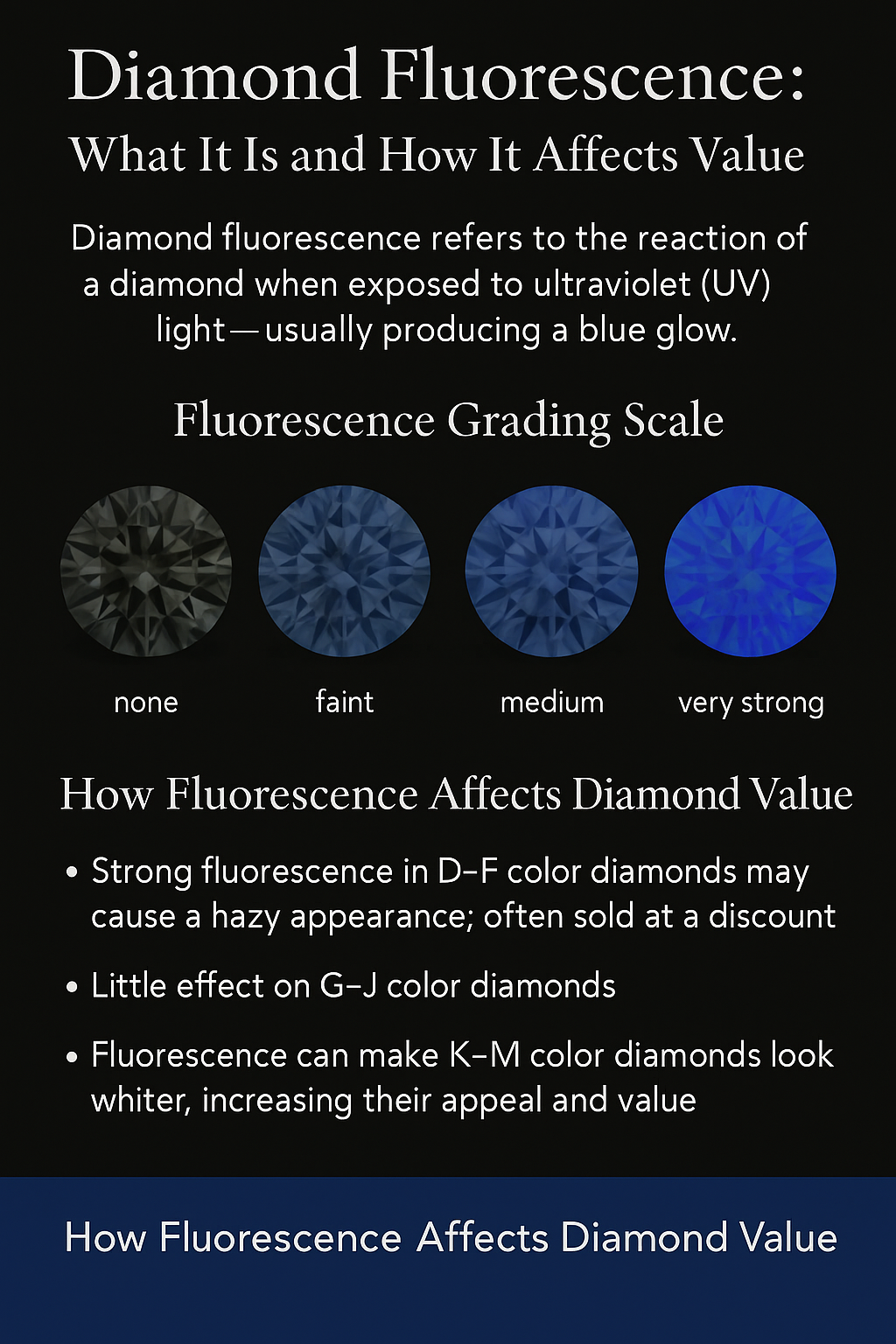
Diamond fluorescence refers to how a diamond reacts to ultraviolet (UV) light—typically by glowing blue. This natural reaction is caused by trace minerals in the diamond’s structure.Fluorescence is not visible under normal lighting but becomes apparent under UV light, such as direct sunlight or black light. Want to learn how diamonds are formed?Check out our diamond education center.
Fluorescence Grading Scale
Fluorescence is graded on the following scale:
None – No glow under UV
Faint – Minimal glow
Medium – Noticeable blue glow
Strong – Clear blue glow, can affect appearance
Very Strong – Intense glow, may impact transparency
Strong fluorescence in D-F diamonds may create a hazy or oily look. These diamonds are often discounted by 10–15%, making them a smart choice if there’s no visible impact.
Near-Colorless to Faint Color Diamonds (G–J Grades)
Fluorescence usually has little effect here. Most diamonds in this range are unaffected in appearance or value.
Lower-Color Diamonds (K–M Grades)
In this range, blue fluorescence can help neutralize yellow undertones, making the diamond appear whiter. This can increase visual appeal and value—especially for budget-conscious buyers.
For value buyers: A D–F diamond with strong fluorescence might offer great savings.
For visual impact: Fluorescence can enhance lower-color diamonds beautifully.
For collectors: Some people love the black-light glow of very strong fluorescent stones.
Fluorescence is often misunderstood—but it can work in your favor. The key is knowing how it pairs with a diamond’s color grade and ensuring it doesn’t affect transparency.
At1ctlabdiamonds.com, you can filter by fluorescence to find the perfect glow for your budget.
Diamond clarity hits your wallet hard. Only 20% of diamonds get Flawless or Internally Flawless grades — they’re rare as hen’s teeth. But here’s the kicker: these pr…