
A practical guide to choosing the best diamond jewelry for everyday wear.
Most diamond jewelry is designed to look beautiful in a box. Very little of it is designed to survive real life —
Everyday wear includes friction, impact, soap, sweat, travel, work, typing, sleeping, and accidental knocks that happen hundreds of times a day. When people search for the best diamond jewelry for everyday wear, what they’re really asking is:
Which piece will still look good after months and years of living in it?
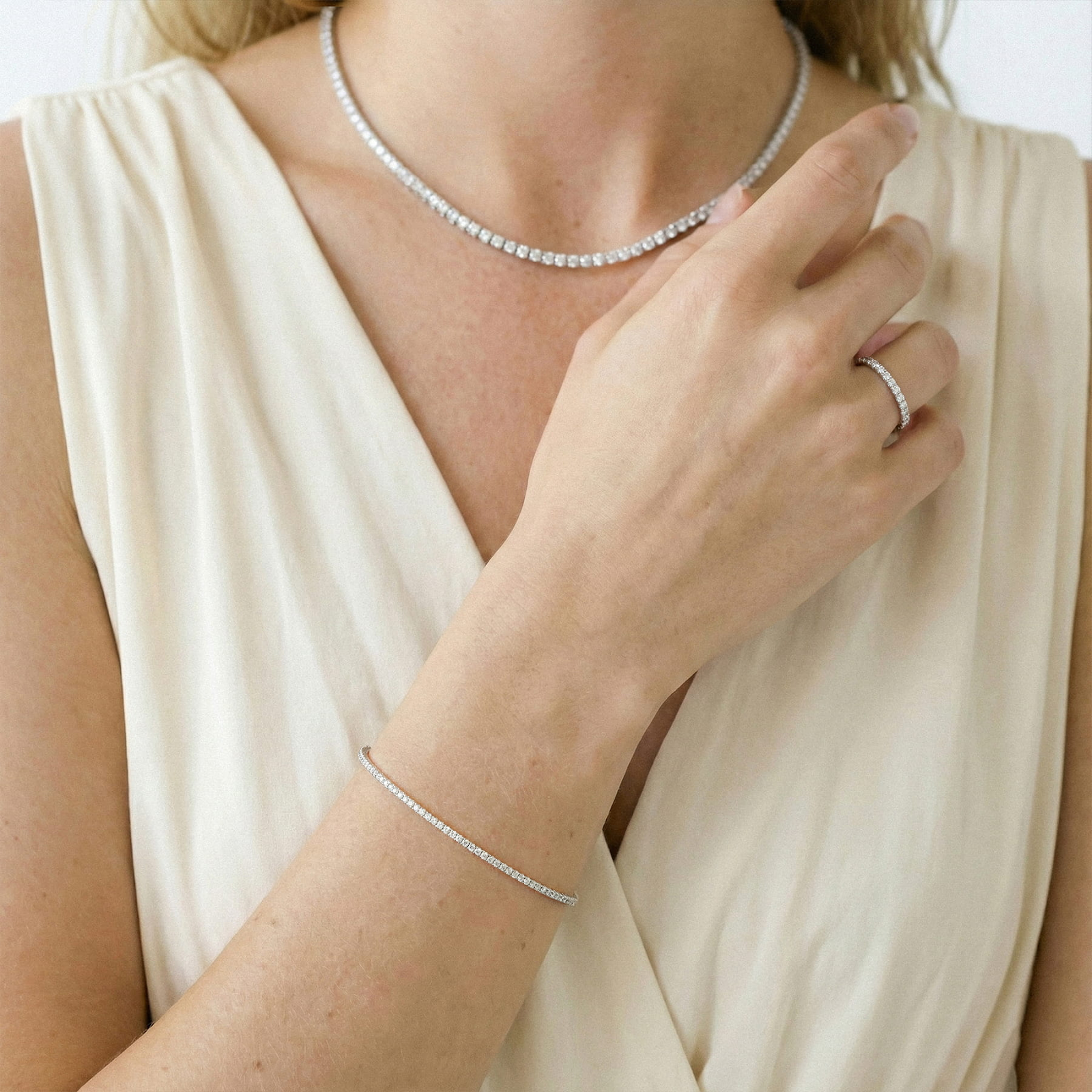
The answer is simple: the best diamond jewelry for everyday wear lasts or fails based on structure, not price or sparkle.
After seeing consistent patterns in how diamond jewelry ages, breaks, loosens, or stays flawless, one thing becomes clear: durability is not about price or sparkle. It’s about structure, setting, and smart design choices.
This guide breaks down what actually survives everyday wear, what quietly deteriorates, and how to choose the best diamond jewelry for everyday wear without regret.
Which Diamond Jewelry Is Best for Everyday Wear Based on Durability
The best diamond jewelry for everyday wear often looks simpler than you expect. That’s not a coincidence — it’s physics.
These pieces hold up because they minimize friction, reduce exposed stress points, and distribute force evenly over time.
1. Bezel-set diamond rings
If there is one setting that consistently qualifies as the best diamond jewelry for everyday wear, it’s the bezel. Bezel settings are the most durable ring setting for everyday wear because they eliminate prong failure.
A bezel wraps metal completely around the diamond’s edge, protecting it from impact and eliminating the most common failure point: loose prongs. Because the stone sits lower and is supported evenly, it resists daily knocks, bending, and snagging.
Bezel rings are especially ideal for:
- people who type a lot
- hands-on work
- travel-heavy lifestyles
- anyone who wears their ring 24/7
They may look understated, but in terms of longevity, they outperform almost everything else.
Explore Everyday-Wear Diamond Rings
2. Low-profile diamond studs (with 3–4 prongs max)
Diamond studs are often considered the safest everyday jewelry — but only if the structure is right.
The best diamond jewelry for everyday wear in earrings:
- sits close to the ear
- uses fewer prongs
- avoids tall basket settings
- has secure posts and backs
Low-profile studs don’t snag on clothing, don’t twist under pressure, and rarely loosen. High baskets, on the other hand, create leverage; and leverage leads to metal fatigue over time.
3. Simple solitaire diamond pendants
Pendants work beautifully for daily wear because gravity works with them, not against them.
A single diamond pendant on a durable chain experiences minimal friction and almost no impact. As long as the chain is strong and the setting isn’t overly delicate, this is one of the safest forms of diamond jewelry for everyday wear.
This is why solitaire pendants are often among the longest-lasting pieces people own.
4. Thicker plain bands with one focal stone
When it comes to rings, thickness matters more than people realize.
A band that’s 1.8–2.0mm thick with one central stone resists bending, holds its shape, and distributes stress evenly. Thin bands may look elegant, but they flex, and repeated flexing is what causes warping, cracks, and loose stones.
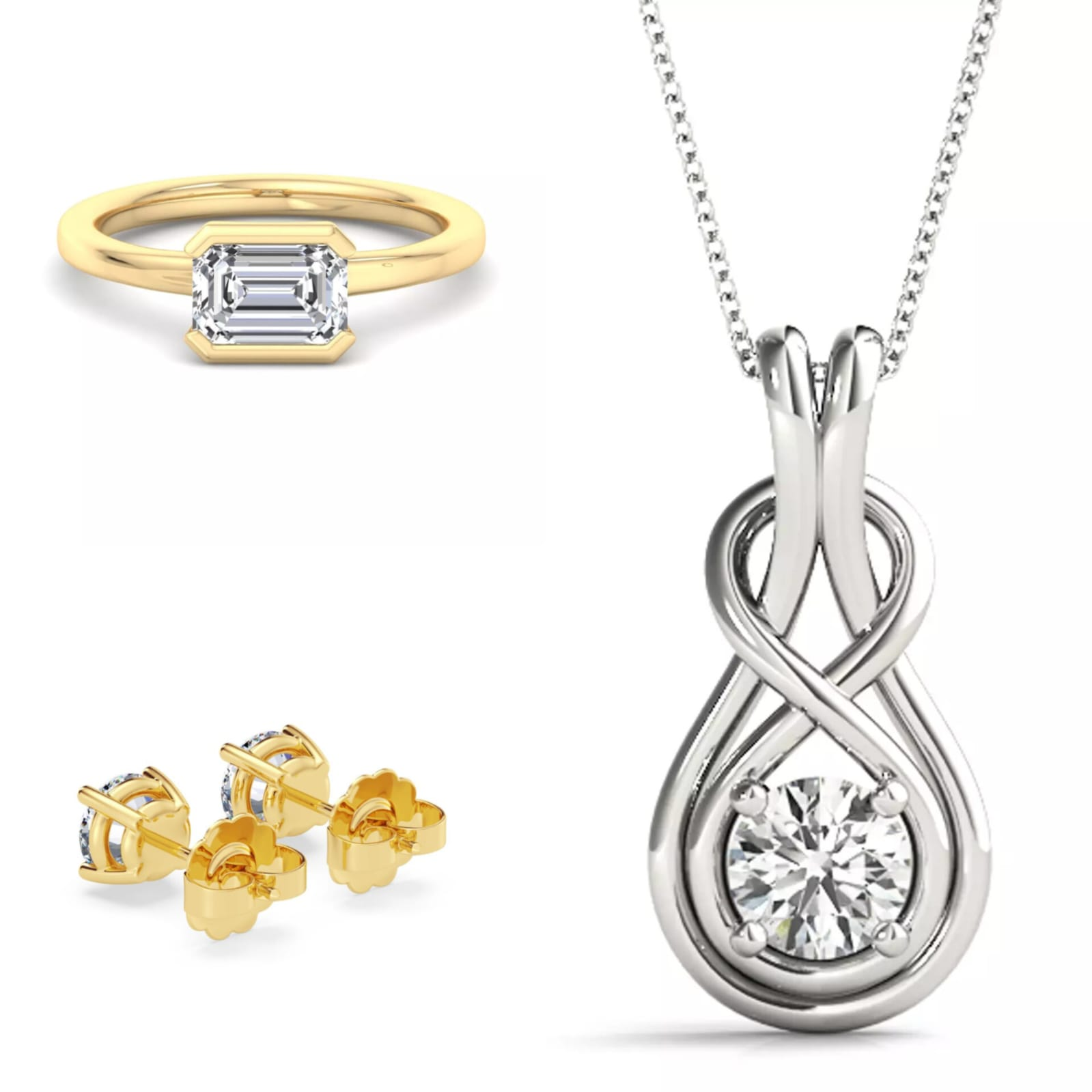
Structurally, thicker bands with a single focal stone are among the smartest forms of the best diamond jewelry for everyday wear.
Diamond Jewelry That Fails Everyday Wear (And Why It Happens)
This is where most disappointment comes from. The below designs photograph beautifully, but they are structurally fragile for daily life:
1. Micro-pavé bands
Micro-pavé uses tiny stones held by tiny beads of metal. Over time, those beads wear down from friction, causing stones to loosen or fall out.
The sparkle fades unevenly, repairs become frequent, and the ring slowly looks “tired.” This is one of the most common regrets in everyday diamond jewelry.
2. High-set halos
High-set halos expose prongs and edges to constant impact. Each knock may seem harmless, but metal weakens through repeated stress.
This leads to bent prongs, loose center stones, and halos that lose symmetry over time, especially for daily wearers.
3. Ultra-thin bands (below 1.6mm)
Thin bands bend. Repeated bending causes metal fatigue, and fatigue causes failure; often at solder points or stress zones.
No matter how expensive the diamond is, a thin band will not last daily wear.
4. Open galleries and exposed culets
Open designs collect soap, oil, dust, and residue. Over time, diamonds look cloudy and dull unless cleaned constantly.
They also expose the stone’s most fragile areas, increasing the risk of chipping.
Note: Overall, most everyday jewelry failures are caused by thin metal and exposed stones, not diamond quality.
When Diamond Jewelry Fails During Everyday Wear (Simple Physics Explained)
Diamond jewelry doesn’t fail randomly. It fails predictably.
The most common causes include:
Friction: rings suffer the most, pendants the least
Impact: raised stones take direct hits
Metal fatigue: thin designs flex repeatedly
Chemical buildup: soap and oils dull stones
Micro-bends: tiny movements add up over time
Once you understand this, choosing the best diamond jewelry for everyday wear becomes easier because you’re no longer guessing based on looks alone.
Smarter Alternatives to Fragile Everyday Diamond Jewelry
If you love fragile designs, you don’t need to abandon them. Just choose smarter versions.
Love pavé?
Choose half-pavé with thicker metal walls
Love halos?
Choose a low halo or bezel halo
Love thin bands?
Go 1.8–2.0mm with comfort fit
Love sparkle?
Choose fewer, larger stones instead of many tiny ones
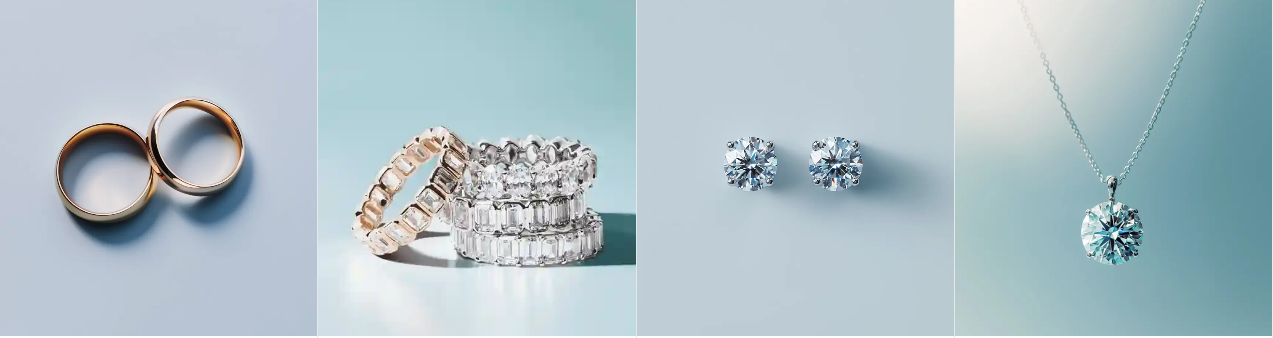
These swaps preserve style while dramatically increasing durability.
Checklist: How to Choose the Best Diamond Jewelry for Everyday Wear
Before buying what you think is the best diamond jewelry for everyday wear, ask:
- Is the stone protected?
- Are there fewer exposed prongs?
- Is the band thick enough to resist bending?
- Can it survive showers, travel, work, and sleep?
- Will it look better or worse with wear?
If it fails more than two, it’s not everyday jewelry — it’s occasional jewelry.
Final Thought: The Best Diamond Jewelry for Everyday Wear Is Structural, Not Decorative
The best diamond jewelry for everyday wear is designed for structure, not decoration. It’s designed to disappear into your life — to move with you, age with you, and still look right years later.
That’s why the smartest choices always prioritize:
- protection over height
- strength over thinness
- structure over excess
When diamond jewelry is made for real life, it stops demanding attention. You stop checking prongs, adjusting settings, worrying about knocks or wear. And that’s when it earns its place: not as something precious you protect, but as something you live in.
If you’re building a collection you plan to wear, not store, this is how the best diamond jewelry for everyday wear should be chosen.
Browse Diamond Jewelry Designed for Everyday Wear
Frequently-Asked Questions